ANY-maze Help > The ANY-maze reference > The Protocol page > The elements of a protocol > Behaviour > Sequences > Change to sequence analysis in V6.11
Change to sequence analysis in V6.11

Overview
The way in which sequences are analysed was changed slightly in version 6.11 of ANY-maze. This change can mean, that under certain circumstances the results of a sequence will differ when analysed in version 6.11, compared to earlier versions. This topic explains the change.
If you want to continue to use the old method to analyse a sequence, which can be useful if you intend to compare the results of an experiment performed in version 6.11 with those of an experiment performed in an earlier version, then you can do so by selecting the option to Use old sequence analysis method, which is included in the options for the root sequences item in the protocol.
Details
The change to sequence analysis only affects sequences that:
| • | Include steps that are Based on zones (as opposed to areas you selected in the apparatus) |
| • | And then only if the zone's entry settings use the area of the animal |
| • | And you have not selected the sequence option Sequence is not broken by moves to positions which are not in any step |
In all other cases the sequence analysis is unchanged.
The change to sequence analysis is best explained by an example. Consider the apparatus in figure 1 (below). Here we have set up two zones, Left and Right. For both of these zones we have specified that the animal has entered the zone when at least 85% of its body is in the zone and doesn't exit while at least 75% of its body remains in the zone.
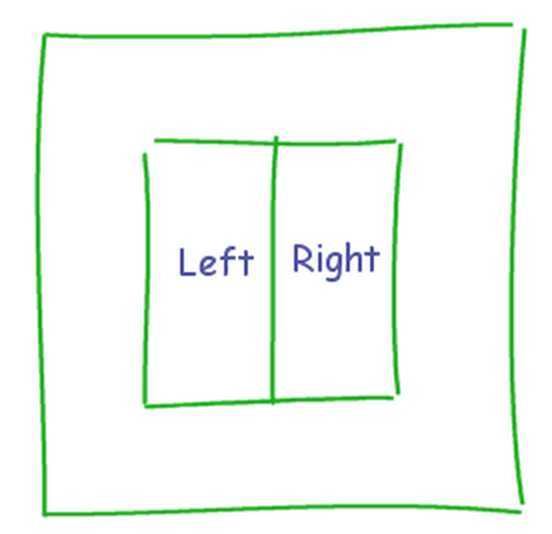
Figure 1. Example apparatus has two zones defined, Left and Right.
Now consider what happens when the animal walks from the Left zone to the Right zone. As it is in the Left zone 100% of its body is there. But as it starts to move into the Right zone so the percentage of its body in the Left zone will drop until it gets to the point where only 74% is in the Left; 74% is below 75%, so it will not be considered to be in the Left zone. At this point 26% of its body will be in the Right, so it won't be considered to be in that zone either - so it is in neither zone. As it continues to walk into the Right zone, eventually it will get 85% of its body into the Right and at that point it will be considered to be in the zone. So, what we have is:
In Left zone > Not in any zone > In Right zone.
Now consider a sequence that is designed to detect movement from the Left zone to the Right zone. This would be very simple, step 1 would be 'Left zone' and step 2 would be 'Right zone'. However, strictly speaking the animal will not complete this sequence by moving from the Left to the Right because, as we saw in the previous paragraph, as it moves from the left to the right there is a period when it is not in either zone.
While this is strictly correct, it is not very intuitive, as the animal clearly walks from the left to the right and you would probably expect the sequence to be completed. In versions prior to 6.11, when analysing a sequence, ANY-maze detected this specific situation and ignored the moment when the animal was 'Not in any zone' and so would consider the animal to have completed the sequence. However, in some rare circumstances this could interfere with the correct analysis of a sequence and in version 6.11 this processing was therefore removed.
What this means is that the sequence defined above will now NOT be satisfied as the animal moves from the Left zone to the Right zone, which is strictly correct. However, that leaves the question, how could you detect a movement from the Left zone to the Right zone; there are two answers:
| 1. | You could simply switch on the option Sequence is not broken by moves to positions which are not in any step. However, this will ignore moves to any area which is not in any step, and that may not always be suitable. |
| 2. | You could solve this by adding another zone to your protocol and including it in the sequence definition. Let's consider our example. Here you would add another zone which consists of the areas of both the Left and the Right Zones - let's call it LeftAndRight. You would probably choose to use the same entry/exit criteria as you are using for the individual zones, so 85% for an entry and 75% for an exit, although this is not strictly required. |
You would then define the sequence as consisting of three steps: Left > LeftAndRight > Right. In this example, when the animal is moving from the Left to the Right and reaches the point when it is neither in the Left zone nor the Right it would still be in the LeftAndRight zone and so it would satisfy the sequence. However, if it exited from the Left to some other part of the apparatus it would not be in the LeftAndRight zone and so that would break the sequence.
In fact, this is, in effect, what versions prior to 6.11 did automatically.

© Copyright 2003-2026 Stoelting Co. All rights reserved
ANY-maze help topic T0357